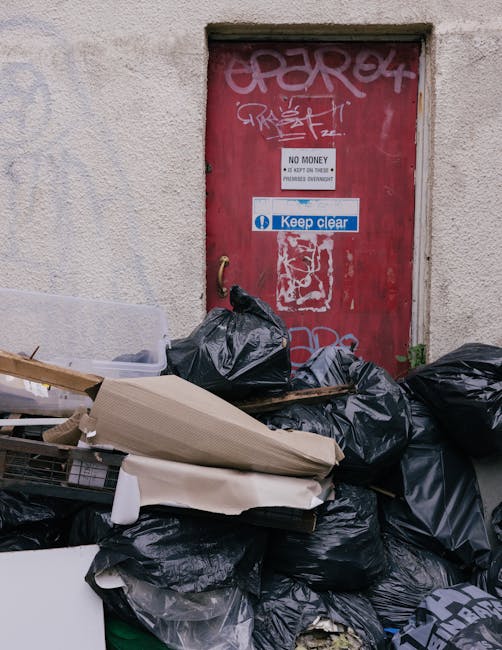
What to know about tricky access rubbish clearances Southwark

If you are dealing with a clearance in Southwark and the access is awkward, you already know the feeling: a narrow staircase, a basement hallway with a tight bend, a lift that seems to have a mind of its own, or a front street where double parking is impossible. That is exactly why What to know about tricky access rubbish clearances Southwark matters. The job is still perfectly doable, but the route in and out changes everything.
This guide explains how tricky-access rubbish clearance works, what usually causes delays, how to prepare the property, what to ask before booking, and how to avoid the sort of mistakes that make a simple job feel like a small disaster. We'll also cover practical comparisons, compliance points, and a realistic checklist you can use before collection day. No fluff. Just the stuff that saves time, money, and a bit of stress.
Why tricky access rubbish clearances matter
Tricky access changes the whole shape of a clearance. In a flat above a parade of shops, a Victorian terrace with a basement, or a converted building with one small lift, the challenge is not always the amount of rubbish. Often it is the route. Can bulky items turn the corner? Is there somewhere safe to park? Are the stairs strong enough for repeated trips? Will neighbours need warning because of noise in the hallway at 8am? Those small details decide whether a job feels straightforward or painfully slow.
In Southwark, access issues are especially common in older housing, mixed-use buildings, and streets that are busy all day. That does not mean you need to panic. It means the clearance needs a bit more planning. Honestly, that's all. A team that understands access can usually adapt, but they need good information up front. If you hide the awkward bits until arrival, everyone has a worse day, and nobody wants that.
It also matters because access affects safety. Carrying furniture down tight stairs, moving appliances around sharp corners, or navigating a narrow communal entrance with other residents passing through can create real risks if it is rushed. A careful clearance protects the property, the people doing the lifting, and the neighbours who just want a quiet morning with their tea. Simple enough, but easy to underestimate.
For many people, the first clue that a job needs special handling is the word basement. Or a loft with a steep ladder. Or a first-floor flat with no lift. Sometimes it is a building that looks easy from outside and then, once you step in, you discover a corridor that narrows halfway down. It happens more often than you'd think.
Expert summary: tricky access rubbish clearance is less about brute force and more about planning, measured handling, and knowing the building before the team arrives. The more precise your access details, the smoother the job tends to go.
How tricky access rubbish clearance works in Southwark
The process is similar to any other rubbish clearance, but with extra attention on the access route, item size, and loading method. A provider will usually want to know what needs removing, where it is in the property, how easy it is to reach, and whether there are any items that need special treatment. If you are booking a broader service such as home clearance or flat clearance, those access details become even more important because the team may be moving multiple item types in one visit.
In practical terms, the job often starts with a quick assessment, either from your description, photos, or a site visit if needed. That assessment helps determine things like staffing, vehicle size, whether a van can park nearby, and whether bulky items should be dismantled before removal. If the property includes mixed waste, furniture, appliances, or builder's debris, the provider may also suggest related services such as furniture clearance, fridge and appliance removal, or builders waste clearance.
There is also the loading stage, which is where access tends to matter most. A straightforward lift-and-load job is much faster than a clearance where every item has to be turned, rotated, carried one by one, or partly dismantled. Sometimes a sofa can go through a door only after the feet are removed. Sometimes a wardrobe has to come apart in the hallway because there is no safe way to angle it down the stairs. That is normal. Annoying, yes. Unusual, no.
When access is especially limited, the team may split the job into phases: smaller items first, larger items second, and any fragile or awkward objects handled separately. Good communication before the day is what keeps this from turning into a puzzle nobody enjoys.
Key benefits and practical advantages
When access is difficult, people sometimes assume a clearance will be slower and more expensive by default. Sometimes that is true, but not always. The real value of a well-planned service is that it reduces friction. You get a cleaner space faster, with fewer surprises and less disruption to the building.
- Less risk of damage: careful planning helps protect walls, bannisters, floors, and communal areas.
- Better time control: when the route is known in advance, the team can work in a more organised way.
- Safer lifting: awkward access often means awkward angles; planning reduces strain and improvised handling.
- Fewer neighbour issues: a proper plan can reduce noise, clutter in shared areas, and time spent blocking entrances.
- More accurate pricing: clear information about access usually leads to a fairer quote, with fewer add-ons later.
- Better recycling outcomes: when items are sorted properly before removal, reusable and recyclable materials are easier to separate.
There is also the emotional side, which people do not always mention. If you are clearing a flat after a move, a tenancy change, or a difficult family situation, the last thing you want is to argue with someone about whether a sofa will fit through a stairwell. A good clearance service takes that pressure off. A lot of the relief comes from simply knowing someone has it under control.
If sustainability matters to you, ask about recycling practices and item sorting. You can also review a provider's approach to recycling and sustainability to understand how they handle recoverable materials. That is particularly relevant when a job includes mixed household items, old furniture, or metal and electrical goods.
Who this is for and when it makes sense
This kind of clearance is useful for landlords, tenants, homeowners, letting agents, executors, housing managers, small businesses, and anyone trying to clear items from a property that simply is not easy to work in. In Southwark, that often means older flats, basement spaces, top-floor conversions, and properties with shared access. Not glamorous, but very real.
It also makes sense when:
- you have large furniture in a flat with narrow stairs
- the lift is too small or unavailable
- there is no nearby parking or loading bay
- items are stored in a loft, garage, or basement
- the property sits on a busy road with little stopping space
- you need a quick turnaround before check-out, sale completion, or a new tenant moving in
It can also be the right choice if you are comparing a clearance with hiring a skip. A skip is not always the easiest answer, especially when access is restricted. You may want to review what can go in a skip and then compare that with a man-and-van style clearance. If the street is tight or permits are awkward, a clearance team can sometimes be the more practical option. That said, it depends on the job. No one-size-fits-all answer here, and that is fair enough.
Step-by-step guidance
Here is the simplest way to approach a tricky-access rubbish clearance without overthinking it. Keep it practical. Keep it honest. A few good details up front make all the difference.
- List what needs removing. Be specific. A sofa, three chairs, a broken chest of drawers, two bags of mixed waste, one fridge, and a pile of cardboard is much more useful than saying "a lot of stuff".
- Describe the access honestly. Mention stairs, lifts, narrow hallways, basement steps, tight corners, coded entry, parking limits, and any shared areas.
- Send photos if possible. A few clear photos of the items and route often tell the story faster than a long phone explanation.
- Check item size and condition. If something is too large to turn safely, ask whether it should be dismantled first.
- Confirm the booking details. Make sure the day, time window, access instructions, and payment terms are clear before the team arrives.
- Prepare the route. Move pets, unlock gates, clear hallways, and keep the path to the items free of trip hazards.
- Separate anything sensitive or hazardous. If you have documents, sharps, chemicals, paint, batteries, or odd leftovers in a cupboard, flag them early.
- Be available at arrival. Someone who can answer quick questions saves a surprising amount of time. Sometimes that is the whole difference.
If your clearance includes office items, mixed paperwork, or confidential material, you may need additional handling. For that, a service such as confidential shredding can be useful alongside the main clearance. And if the job is business-related rather than domestic, take a look at business waste removal so you can align the waste type with the right approach.
One small but useful habit: before collection day, stand at the front door and trace the route to the items in your head. Sounds simple, almost silly. But it often reveals the snag before anyone is sweating on the stairs.
Expert tips for better results
Good clearance work is full of little wins. None of them are dramatic, but they stack up. To be fair, that is true for a lot of things in life.
- Measure the awkward item first. Width, height, depth, and the tightest corridor point all matter.
- Tell the team about the worst bit, not the easiest bit. If there is one impossible corner, mention that first.
- Take handles and feet into account. A sofa that barely fits on paper may still catch on a banister in reality.
- Keep communal access open. If you share a stairwell, avoid leaving bags or furniture in the way, even for a few minutes.
- Ask about dismantling. Some bulky items are quicker to remove in pieces than in one stubborn lump.
- Check whether appliances are disconnected. Washing machines, fridges, and similar items may need a little preparation first. See fridge and appliance removal for that type of job.
- Plan around building rules. Some blocks have moving times, lift booking rules, or quiet hours. Those can be a bigger issue than the rubbish itself.
A good local provider should also be thinking about safety and insurance. Ask how they protect walls, floors, and staircases, and whether they have an insurance and safety approach that fits the risks of the job. That question is not fussy. It is sensible.
One more thing: if you are clearing soft furnishings, especially on upper floors, it may be worth looking at mattress and sofa disposal. Those items can be awkward to carry and often need careful handling through narrow access points.
Common mistakes to avoid
Most problems on tricky-access jobs come from missing information, not bad intent. People often underestimate the building, assume "it should be fine", and then discover the lift is tiny, the stairwell turns sharply, or the parking space is nowhere near the entrance. Happens all the time.
- Being vague about access. "A bit tight" is not enough. Say what is tight and where.
- Forgetting about parking. A van may not be able to stop directly outside, especially on busier Southwark streets.
- Leaving it all to the day. If items need dismantling or moving from a back room, plan that before collection begins.
- Mixing waste types without warning. General rubbish, furniture, appliances, and building debris can all require different handling.
- Not checking building rules. Some shared buildings care a lot about lift bookings and hallway protection. Fair enough, really.
- Hiding hazardous materials. Paint, chemicals, gas canisters, and other risky items need to be flagged early.
Another common mistake is choosing the cheapest quote without asking how access affects the work. A low price can look attractive until the team arrives and realises the job is much harder than described. Then the conversation gets awkward. Nobody enjoys that conversation. Better to be open from the start and keep the quote grounded in reality.
Tools, resources and recommendations
You do not need a van full of specialist gear to make a tricky clearance easier, but a few simple tools and habits help a lot. Nothing fancy. Just sensible preparation.
- Measuring tape: useful for checking door widths, hallways, and item dimensions.
- Phone camera: quick photos of access points, stairs, and bulky items can save a lot of back-and-forth.
- Marker tape or sticky notes: handy if you are separating items to keep, donate, or remove.
- Protective coverings: if you are handling your own route prep, floor protection can reduce scuffs.
- Basic dismantling tools: only where safe and appropriate, and only if you know the item can be separated cleanly.
For a service-based comparison, it may help to read through pricing and quotes before you book. You will get a better sense of what information is needed for a fair estimate, especially if access is likely to slow the job down. If the clearance is part of a broader property reset, a more general waste removal service may also be relevant.
And if you are dealing with a cluttered attic, the logistics can be a little different again. A service like loft clearance is often about careful movement through cramped, sometimes dusty spaces. You know the kind of place: dim light, low beams, and a fine layer of old box dust that seems to get everywhere.
For garages and outside storage spaces, the path is often easier but the volume is higher. In that case, garage clearance or garden clearance may be the better fit.
Law, compliance, standards and best practice
There are a few practical compliance points worth keeping in mind. This is not about making the job sound formal for the sake of it. It is about avoiding problems that are genuinely preventable.
Waste should be handled responsibly, and the provider should know how to separate items that can be reused, recycled, or disposed of in line with accepted UK practice. If you are dealing with electrical items, fridges, or mixed waste from a renovation, that matters even more. If hazardous materials are involved, they should not be slipped into general rubbish. That part is non-negotiable in practice, even if people sometimes try to make it so.
Best practice also includes safe manual handling, suitable vehicles, and clear communication about what is included in the service. On a tricky-access job, these standards are not abstract. They are what keep the property intact and the work efficient. It is also sensible to check the provider's health and safety policy and read their terms and conditions so you know how access issues, item restrictions, and service boundaries are handled.
If you are clearing a business site, compliance becomes even more important because there may be paperwork, records, or regulated waste mixed into the job. That is where careful sorting and clear instructions help prevent mistakes. And if you are unsure whether an item is suitable for collection, ask before the day. Guessing is where trouble tends to start.
Options, methods, and comparison table
There are usually a few different ways to tackle a difficult-access clearance. The best choice depends on space, volume, urgency, and the type of waste involved.
| Method | Best for | Strengths | Limitations |
|---|---|---|---|
| Man-and-van style clearance | Flat clearances, mixed household items, awkward stair access | Flexible, quick, often better for tight buildings and immediate loading | May need more labour for very bulky items or large volumes |
| Skip-based disposal | Projects with enough space outside and steady waste volume | Useful for renovation waste, straightforward sorting, longer fill time | Can be awkward where parking or permits are limited; not ideal for severe access issues |
| Dedicated furniture or appliance removal | Single bulky items or a small set of large pieces | Good for one-off objects and careful handling through tight spaces | Not always cost-efficient for a full property clearance |
| Full property clearance | End-of-tenancy, probate, downsizing, or major decluttering | Can clear multiple rooms in one coordinated visit | Needs strong planning where access is awkward |
If you are not sure which route fits, start with the access constraints first, not the waste type. That is the trick. The property often decides the method more than the rubbish does. Then compare the likely effort against your preferred timeline and budget.
Case study or real-world example
A typical tricky-access job in Southwark might involve a second-floor flat in a converted building. The lift is too small for the wardrobe, the stairs are narrow, and the street outside is busy from early morning. The resident needs the flat cleared before a tenancy handover the next day. Not ideal. A bit nerve-wracking, if we're honest.
In a situation like that, the best outcome usually comes from a short pre-check before the collection date. The team asks for photos of the wardrobe, staircase, front door, and parking area. They suggest removing the wardrobe doors and possibly the feet from the sofa. They also ask the resident to clear the hallway and keep the lift free for a set window. On the day, the items are removed in the right order, with fewer pauses and no last-minute arguments about whether the wardrobe will "just about" make the turn. It will not just about make the turn. Best not to pretend otherwise.
What changed the result? Three things: honest access information, realistic item prep, and a collection plan built around the building rather than around hope. That is what effective tricky-access clearance looks like in real life. Not flashy. Just organised.
Practical checklist
Use this checklist before booking or collection day. It keeps the job grounded and saves a lot of guesswork.
- List every item to be removed.
- Measure bulky furniture and awkward entrances.
- Take photos of stairs, lifts, corridors, and parking restrictions.
- Confirm whether items need dismantling.
- Check if there are shared building rules or time restrictions.
- Separate hazardous, confidential, or special items.
- Make the access route clear and free of obstacles.
- Tell the provider about parking limits or loading constraints.
- Review pricing, payment, and terms before the visit.
- Keep someone reachable on the day in case questions come up.
Quick reality check: if one item looks too big for the route, it probably is. Better to raise it early than to discover it halfway down the stairs with a doorway behind you and no elegant way out.
Conclusion
Tricky access rubbish clearances in Southwark are rarely difficult because of the rubbish itself. They are difficult because of the route, the timing, the building layout, and the small complications that stack up fast. Once you understand that, the whole process becomes easier to manage.
The smartest approach is simple: describe the access honestly, prepare the route, ask about dismantling or special handling where needed, and choose a clearance method that fits the property rather than forcing the property to fit the method. Do that, and the job becomes calmer, safer, and far less chaotic.
If you are still weighing up the best option, take a look at about us to understand the approach behind the service, then review the practical service pages that match your job. A few minutes of planning now can save a whole afternoon later. And sometimes that is the difference between a stressful clearance and a surprisingly smooth one.
Get a free quote today and see how much you can save.
When the access is awkward, the right preparation makes the day feel lighter. That matters more than people think.
Frequently Asked Questions
What counts as tricky access for rubbish clearance?
Tricky access usually means anything that makes moving items harder than a normal front-door pickup: narrow stairs, small lifts, tight corridors, basement steps, long shared hallways, limited parking, or awkward turns inside the property.
Does difficult access always make clearance more expensive?
Not always, but it can affect the quote because it may take more labour, more time, or extra care. Clear photos and accurate descriptions usually help keep pricing fair and avoid surprises.
Should I dismantle furniture before the team arrives?
Only if it is safe to do so and you are sure it will help. In many cases, the clearance team can advise whether a sofa, wardrobe, bed frame, or desk should stay intact or be taken apart first.
Can you clear items from a flat with no lift?
Yes, often you can, but the access details matter a lot. Stairs, tight landings, and item size all affect the plan. It is one of the most common situations in older Southwark buildings.
What should I send when asking for a quote?
Send a list of items, a few photos, and notes about the route in and out. Parking restrictions, lift size, and any shared access rules are especially useful.
Is a skip better than a clearance service for awkward access?
Sometimes yes, sometimes no. A skip works well if there is enough outside space and the waste is suitable. For tight streets, upper-floor flats, or difficult loading routes, a clearance service is often more practical.
What if I need rubbish removed from a basement or loft?
That is very common. Basement and loft clearances often need extra care because access can be steep, narrow, or low-ceilinged. Mention those areas early so the job can be planned properly.
Can hazardous items be included in a normal rubbish clearance?
Usually not in the general sense. Hazardous waste needs separate handling, so always flag items like chemicals, paints, batteries, or anything that may need special disposal. See hazardous waste disposal for the type of service that may be needed.
How can I make a tricky access clearance go faster?
Clear the route, unlock gates, separate keepers from removals, and give the provider exact access details before arrival. If possible, be available to answer questions on the day. That alone can save a lot of time.
Do I need to worry about insurance and safety on a difficult job?
Yes, absolutely. Tight spaces increase the chance of damage or injury if things are rushed. It is sensible to check that the provider has proper safety procedures and appropriate cover.
What kinds of properties in Southwark usually have access issues?
Older terraces, converted flats, basement properties, top-floor walk-ups, shared blocks, and buildings on busy roads often have access constraints. Southwark has plenty of these, so the situation is very familiar to local clearance teams.
How do I know whether my job is worth booking as a full clearance?
If you have several rooms, bulky furniture, mixed waste, or a deadline such as a move-out or tenancy change, a full clearance is usually worth considering. If it is just one awkward item, a smaller removal may be enough.